All Categories
Featured
Indicators on Ways to Reach APFSC with Your Debt Forgiveness Process You Should Know
Table of Contents
That releases up cash in the short term, and you might have 3 to four years to save toward the settlement quantity. Really unsafe to credit rating, mostly as a result of missed settlements and a negative "resolved" mark that could remain on your credit history record for as much as seven yearsMay be just option if other alternatives (financial debt consolidation, balance transfer bank card, financial debt forgiveness) aren't possibleTypically requires a fee to the third party, which can balance out some or every one of the financial savings from financial obligation settlementMay help you avoid insolvency if you've missed out on several paymentsNot all financial institutions deal with financial debt settlement business Debt forgiveness may be best for you if you are experiencing an economic hardship that makes it virtually impossible to pay down your debt equilibriums.
With a DMP, you make one month-to-month payment to the debt counseling firm. Those funds are after that distributed to creditors of your unsecured financial debts, such as charge card and installment car loans. The company deals with your lenders to reduce rates of interest or forgo costs, however some creditors may refuse such concessions.
A debt loan consolidation lending combines your qualified financial obligations into one brand-new loan. It can help you pay down financial debt if you're able to protect a lending rate that's less than the typical price of the accounts you're consolidating. Nonetheless, you must avoid acquiring debt on those recently gotten rid of accounts or your debt can grow also greater.
That provides you plenty of time to get rid of or substantially decrease your equilibrium while making interest-free payments.
9 Easy Facts About Private Debt Forgiveness Organizations Compared Shown
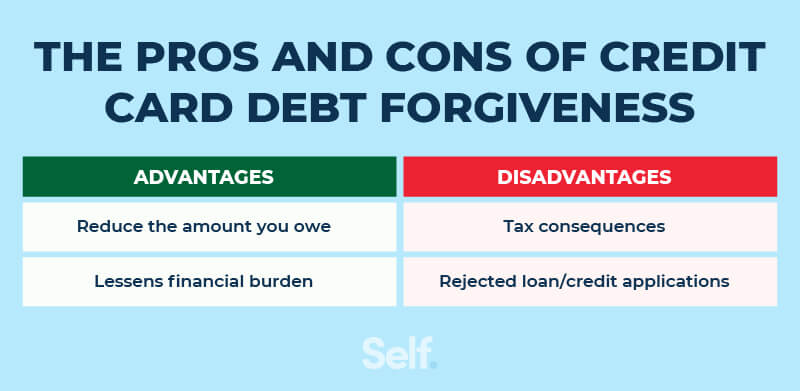
You might need it if your lender or a collection company ever tries to gather on the debt in the future. When a loan provider forgives $600 or even more, they are called for to send you Kind 1099-C.
Financial obligation mercy or settlement generally harms your credit history. Anytime you work out a financial obligation for less than you owe, it may look like "cleared up" on your debt report and impact your credit history for seven years from the day of negotiation. Your credit history can additionally go down considerably in the months bring about the mercy if you fall back on payments.
Some Known Details About Professional Guidance Safeguards Your Home
This scenario commonly results from underreporting income, not filing returns on time, or disparities found during an IRS audit. The repercussions of gathering tax obligation debt are severe and can include tax liens, which give the Internal revenue service a legal case to your property as protection for the financial obligation.
Higher rate of interest on available credit rating. Earnings and Financial institution Accounts IRS can impose (take) wages and bank accounts to please the debt. Minimized earnings and disruption of vital monetary procedures. Residential property Seizure In extreme instances, the internal revenue service can take and market property to cover the financial obligation. Loss of important possessions and prospective displacement.
Clinical depression, stress and anxiety, and other psychological health issues. Social Stigma Encountering legal action from the internal revenue service can bring social stigma. Damage to online reputation and partnerships. Work Opportunities A poor credit report as a result of exhaust financial obligation can restrict job opportunity. Trouble searching for or maintaining a job. Government Advantages Tax financial debt may influence qualification for government benefits, such as Social Safety And Security and Medicaid.
Rebuilding Personal Financial Standing Post Debt Forgiveness - Truths
The OIC takes into consideration a number of factors, including the taxpayer's earnings, expenses, property equity, and capacity to pay. Effectively bargaining an OIC can be intricate, requiring a thorough understanding of the internal revenue service's standards and a solid debate for why your offer straightens with your ability to pay. It is necessary to keep in mind that not all applications are approved, and the process requires comprehensive economic disclosure.
The IRS assesses your general financial circumstance, including your revenue, expenditures, property equity, and capacity to pay. You should also be existing with all filing and settlement demands and not remain in an open insolvency proceeding. The IRS also considers your conformity background, reviewing whether you have a record of prompt filing and paying tax obligations in previous years.
Comparing Debt Forgiveness Options to Find the Ideal Fit for Beginners
The application procedure for a Deal in Compromise involves several comprehensive steps. You should finish and submit Internal revenue service Type 656, the Offer in Concession application, and Form 433-A (OIC), a collection information declaration for people. These forms call for thorough financial information, consisting of information about your earnings, financial debts, expenditures, and possessions.
Back taxes, which are unpaid tax obligations from previous years, can considerably raise your total IRS financial obligation if not attended to without delay. This debt can accrue interest and late payment fines, making the initial quantity owed much bigger gradually. Failing to pay back tax obligations can result in the internal revenue service taking enforcement actions, such as providing a tax lien or levy against your residential or commercial property.
It is essential to deal with back tax obligations immediately, either by paying the total owed or by arranging a settlement plan with the IRS. By taking positive steps, you can prevent the build-up of added rate of interest and charges, and stop a lot more aggressive collection actions by the internal revenue service.
One common reason is the belief that the taxpayer can pay the sum total either as a lump amount or through a layaway plan. The IRS also considers the taxpayer's income, costs, possession equity, and future earning capacity. If these factors show that the taxpayer can pay for to pay more than the offered amount, the internal revenue service is likely to deny the deal.
The Of Accessing Assistance for Your Importance of Financial Literacy for Better Management : APFSC Journey
It is crucial to supply accurate and full details in your application and to seek advice from a tax obligation professional to improve the possibilities of approval. Taking care of IRS financial debt can be complicated and complicated. Tax obligation experts, such as Certified public accountants, tax obligation lawyers, or signed up representatives, can offer indispensable aid. They have the proficiency to browse the ins and outs of tax obligation legislation and internal revenue service procedures.

Table of Contents
Latest Posts

Credit Card Debt Relief Explained Fundamentals Explained
3 Easy Facts About The Truth About Fee Waivers and Discounts for Bankruptcy Counseling: Who Qualifies? for Burdened Consumers Shown
No-Cost Accessible Financial Literacy Resources Provided to You Fundamentals Explained
More
Latest Posts
Credit Card Debt Relief Explained Fundamentals Explained
No-Cost Accessible Financial Literacy Resources Provided to You Fundamentals Explained